

September 17, 2026
Nusa Penida is one of the most reliable places in Indonesia to see reef mantas, and you don't need to dive to do it. Here is what to expect.
The mantas
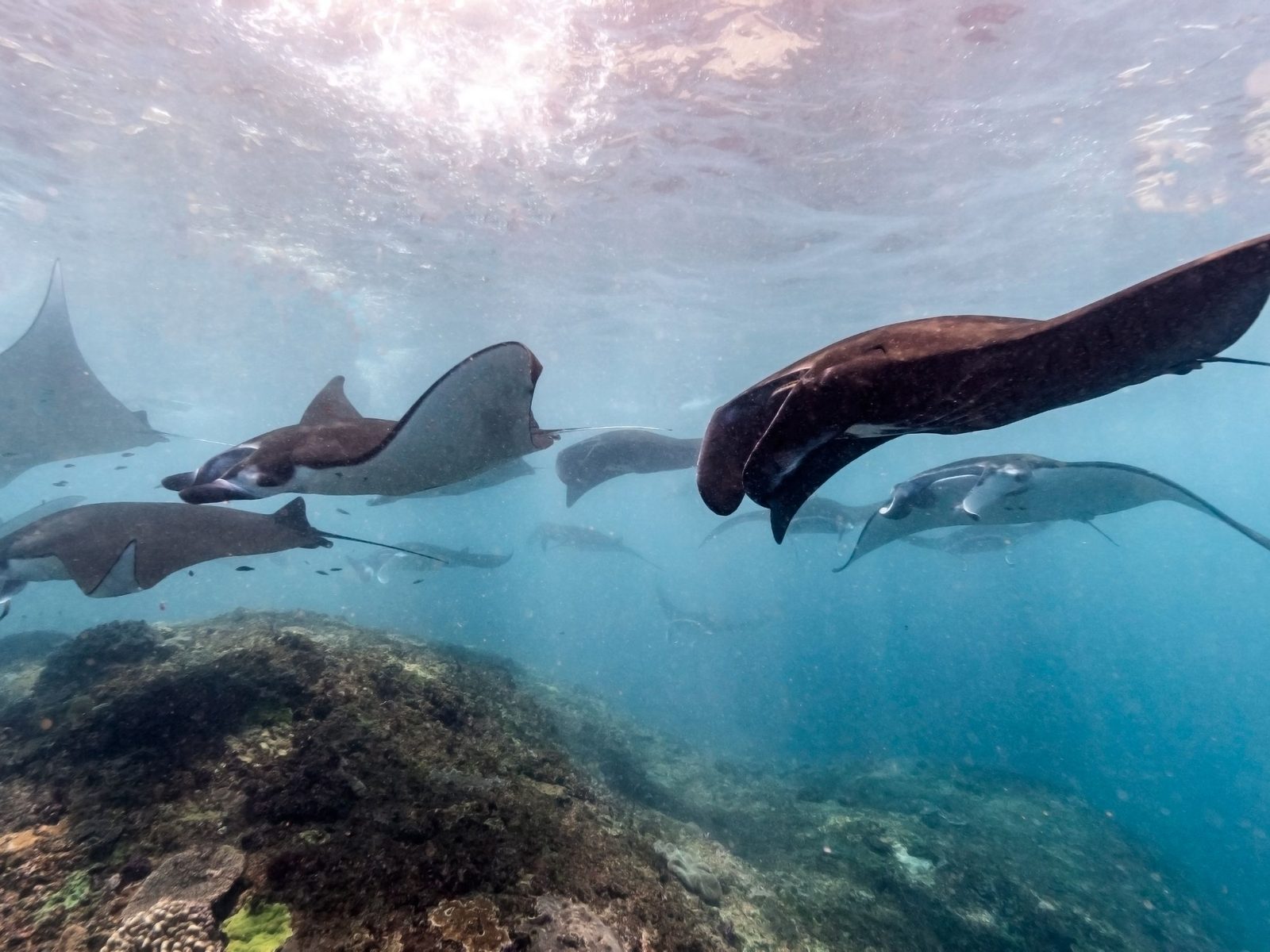
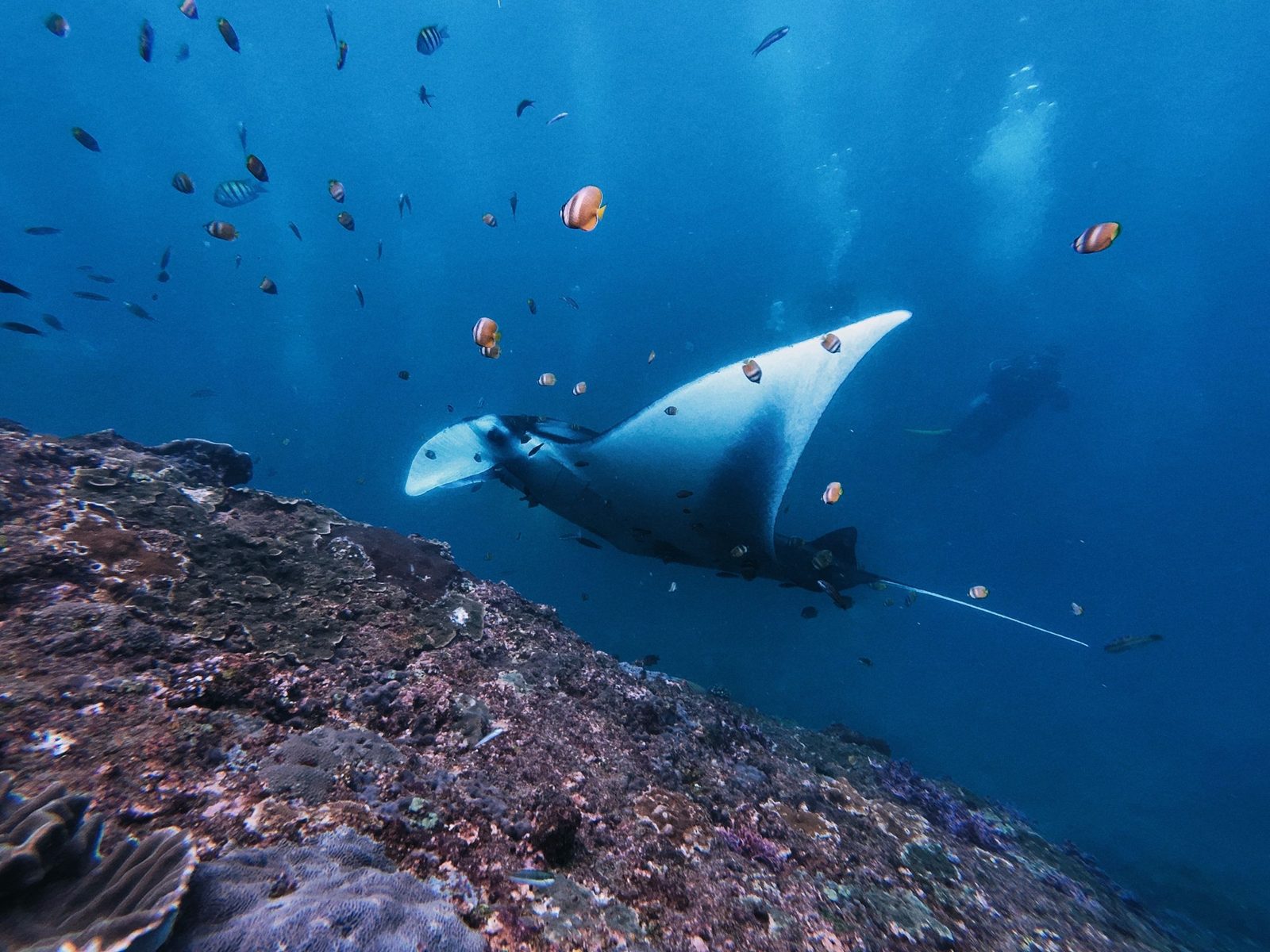
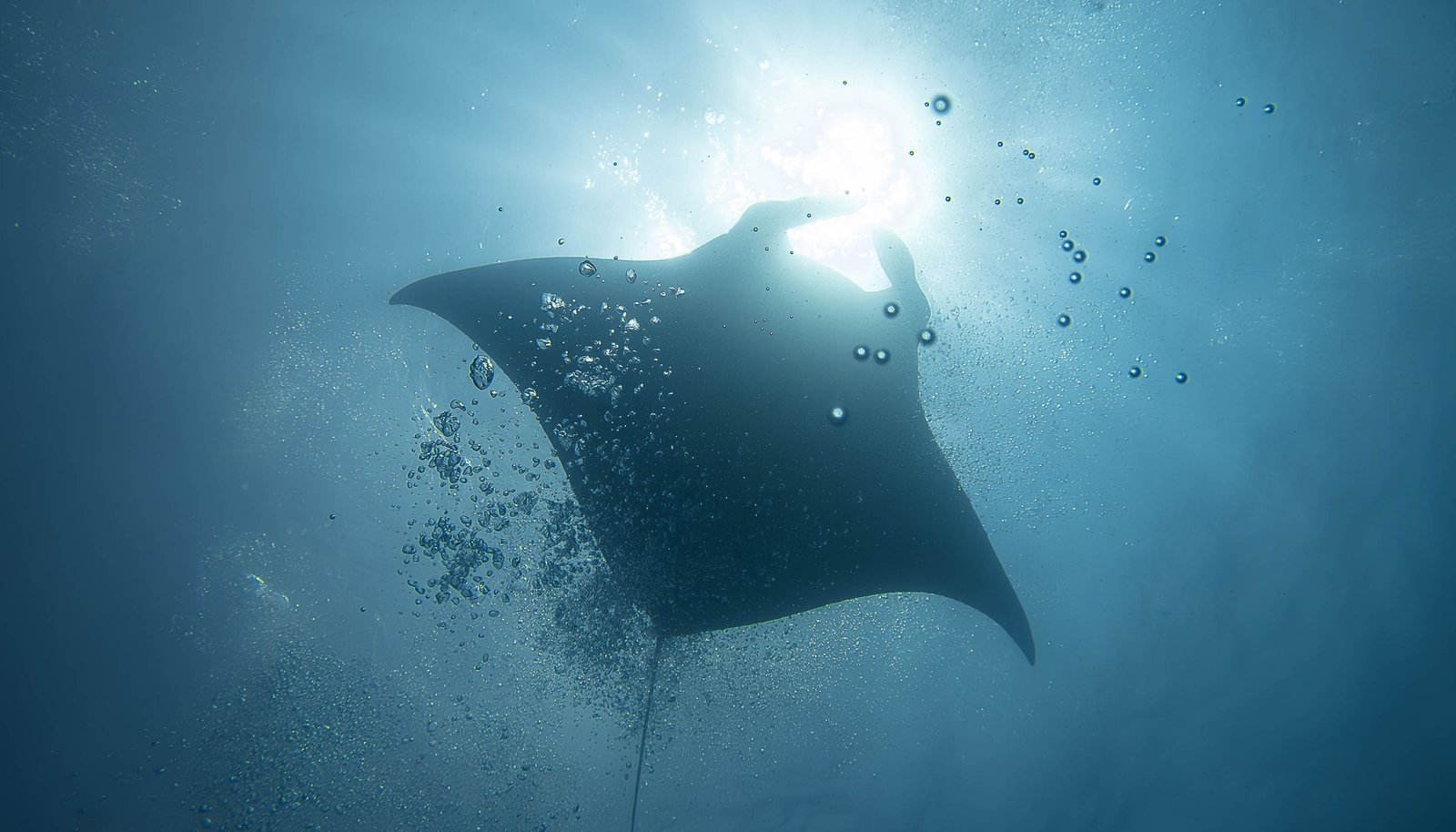
The mantas here are reef mantas, which commonly reach three to four metres from wingtip to wingtip. They feed on plankton in open water and come to a few spots off the south-west coast to be cleaned: they circle slowly over the rocks while small wrasse pick parasites from their skin. Those cleaning stations are what make sightings so reliable.
The waters around Nusa Penida are part of a marine protected area, and a marine park fee is charged on every trip.
Manta Point and Manta Bay
Manta Point lies under the cliffs on the south-west coast, open to the Indian Ocean. The mantas circle a few metres below the surface, so snorkellers can watch from above while divers settle on the rocks below.
The same openness makes it choppy. There is often a swell, the boat rolls while it waits, and the water moves you around. When the swell is too big, boats go to Manta Bay, a more sheltered bay nearby that mantas also visit.
How likely a sighting is
Very likely, through most of the year, and never certain. Mantas are wild, and on some days they simply don't come. A good guide will tell you honestly how the morning looks before you get in.
Snorkelling or diving
Snorkellers see the mantas from above, often several at once, and it is enough for most people. You should be comfortable swimming in open water; vests are available.
Divers can settle on the rocks at around 5 to 15 metres and watch the mantas pass overhead, often much closer. The currents around Nusa Penida are strong, so dive only with a licensed centre and a guide who knows the sites.
How to behave
- Stay at least three metres away.
- Never touch them. A touch strips the protective coating from their skin.
- Don't chase them or dive down onto them. Let them come to you.
- Don't block the path of a manta circling a cleaning station.
- No flash photography.
The water
The surface is usually 26 to 29°C. From July to October, cold water rises from the deep, and on dive sites it can drop below 20°C. That is also when oceanic sunfish, the mola, rise to cleaning stations at Crystal Bay and other sites, usually deeper than 20 metres.
What to bring
Reef-safe sunscreen or a rash vest, a mask that fits you well if you have one, and a seasickness tablet if you are prone to it. The boat is usually rolling while you wait.
With us
Our private manta day puts you on your own boat with a guide in the water, from Sanur or from the islands. Certified divers can dive Manta Point and Crystal Bay with a private dive guide.